Bhubaneswar: Odisha has emerged as one of the states with the lowest out-of-pocket expenditure (OOPE) on hospitalisation in the country, according to the latest findings of the National Sample Survey (NSS), highlighting the growing impact of public health interventions and financial protection schemes in the state.
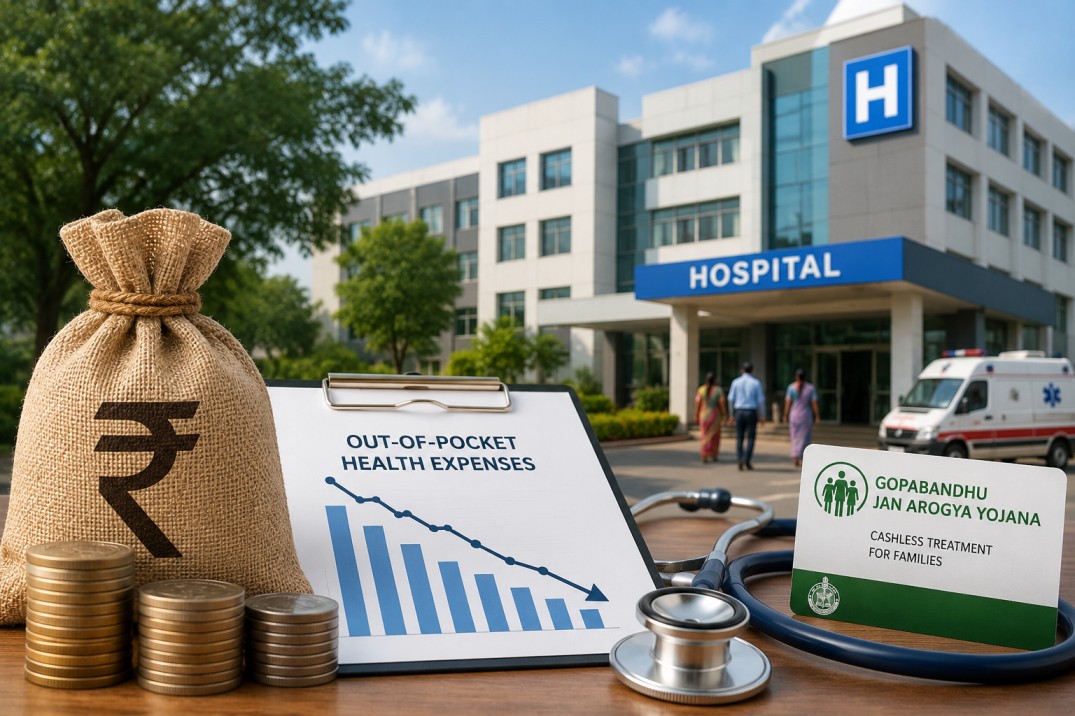
The survey indicates that patients in Odisha spend significantly less from their own pockets for hospital treatment compared to the national average. The state’s average out-of-pocket medical expenditure per hospitalisation case (excluding childbirth) stood at around ₹16,948, considerably lower than the national average, reflecting improved affordability of healthcare services.
Health experts attribute the achievement to the expansion of government healthcare facilities, increased health insurance coverage, and the implementation of schemes such as the Gopabandhu Jan Arogya Yojana (GJAY), which provides cashless treatment for eligible families in empanelled hospitals.
The NSS findings come at a time when healthcare costs continue to be a major concern across India. Nationally, the median out-of-pocket expenditure per hospitalisation in 2025 was recorded at ₹11,285, though a small number of high-cost treatments continue to push up average spending figures.
Public hospitals have played a crucial role in reducing financial burdens on patients. National data show that average expenditure per hospitalisation in public facilities remains substantially lower than in private hospitals, where treatment costs can be several times higher.
Officials said Odisha’s focus on strengthening primary healthcare, expanding insurance coverage, and improving access to affordable treatment has helped shield many households from catastrophic medical expenses. The state’s continued investment in public health infrastructure is expected to further reduce financial barriers to healthcare, particularly for vulnerable and low-income populations.
Healthcare economists note that while lower out-of-pocket spending is an encouraging indicator, sustained efforts are needed to improve healthcare quality, accessibility, and financial protection to ensure that rising healthcare needs do not translate into greater economic hardship for families.
The NSS findings underscore Odisha’s progress in making healthcare more affordable and accessible, positioning the state as a notable example in India’s efforts toward universal health coverage and reduced healthcare-related financial distress.