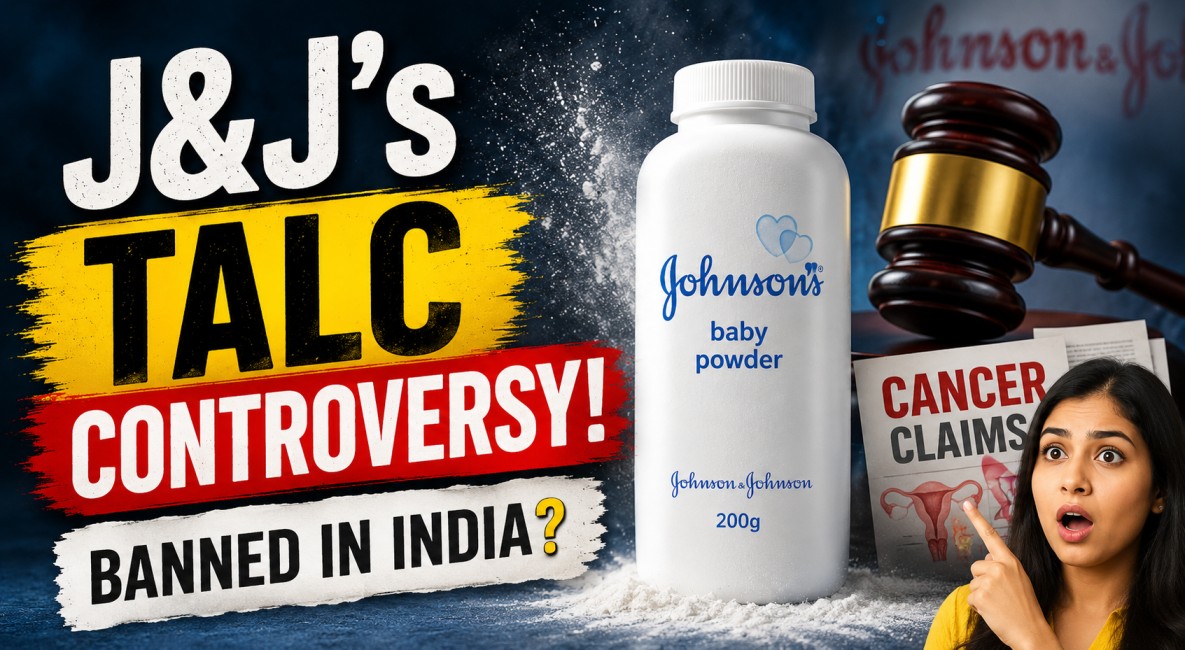
New Delhi: Johnson & Johnson (J&J) is back in the global spotlight after agreeing to a proposed USD 5.5 billion settlement to resolve tens of thousands of lawsuits in the United States. The lawsuits alleged that the company’s talc-based baby powder caused ovarian cancer and other illnesses.
While the settlement has reignited concerns worldwide, many Indians are asking a simple question: Should we be worried? Is talcum powder banned in India?
Let’s break down the facts.
What is the J&J talc controversy?
For years, thousands of women in the US claimed that long-term use of Johnson & Johnson’s talc-based baby powder led to ovarian cancer. Some lawsuits also alleged that certain talc products contained asbestos, a known cancer-causing mineral.
Johnson & Johnson has repeatedly denied these allegations, maintaining that its products are safe, asbestos-free, and backed by decades of scientific testing. The company says the settlement is intended to end prolonged litigation and does not amount to an admission of wrongdoing.
Did India witness similar cancer claims?
No.
Unlike the United States, India has not witnessed mass lawsuits or court rulings linking talcum powder to ovarian cancer.
Although Indian regulators reviewed Johnson’s Baby Powder after international concerns surfaced, the tested samples met Indian quality standards. No large-scale legal action similar to the US has taken place in the country.
Is talcum powder banned in India?
No, talcum powder is not banned in India.
Talc continues to be an approved ingredient in cosmetic products, provided it meets the safety standards prescribed by Indian authorities.
Globally, however, Johnson & Johnson stopped selling its talc-based baby powder in several markets and replaced it with a cornstarch-based formulation.
Explainer: What is talc?
Talc is a naturally occurring mineral made primarily of magnesium, silicon and oxygen. It is valued for its ability to absorb moisture and reduce friction, making it a common ingredient in:
- Baby powders
- Body powders
- Cosmetic products
- Some pharmaceutical formulations
The concern arises because talc deposits can naturally occur near asbestos deposits. If talc is not carefully purified, it may become contaminated with asbestos.
Is baby powder safe for babies?
Most paediatricians advise that baby powder should be used sparingly.
If you choose to use it:
- Avoid sprinkling powder directly onto a baby’s face.
- Keep the powder away from the baby’s nose and mouth.
- Pour a small amount onto your hand first before applying.
- Avoid creating airborne powder that can be inhaled.
Many parents today prefer cornstarch-based baby powders, which reduce concerns related to talc.
Does talc really cause cancer?
Scientists are still debating the issue.
Some studies have suggested a possible association between long-term genital use of talc and ovarian cancer, while others have found little or no convincing evidence of such a link.
Health experts also stress that pure cosmetic-grade talc is different from talc contaminated with asbestos. Asbestos is a confirmed carcinogen, whereas the evidence linking asbestos-free talc to ovarian cancer remains inconclusive.
What should consumers do?
Experts recommend using cosmetic products according to instructions and avoiding unnecessary inhalation of any fine powder, especially in infants.
If you’re concerned, you may:
- Choose cornstarch-based baby powders.
- Check product labels before purchasing.
- Consult your doctor if you have specific health concerns.
The Johnson & Johnson settlement has renewed global discussion over the safety of talcum powder, but it does not mean talcum powder is banned or proven to cause cancer in everyone who uses it.
For Indian consumers, talc-based products remain legal and regulated. As research continues, experts advise informed choices rather than panic, while regulators continue to monitor product safety.