India’s latest health survey has revealed a sharp gender divide in substance use, with men far more likely to consume alcohol and women showing a comparatively higher presence in tobacco use than drinking, underlining the need for gender-specific public health interventions.
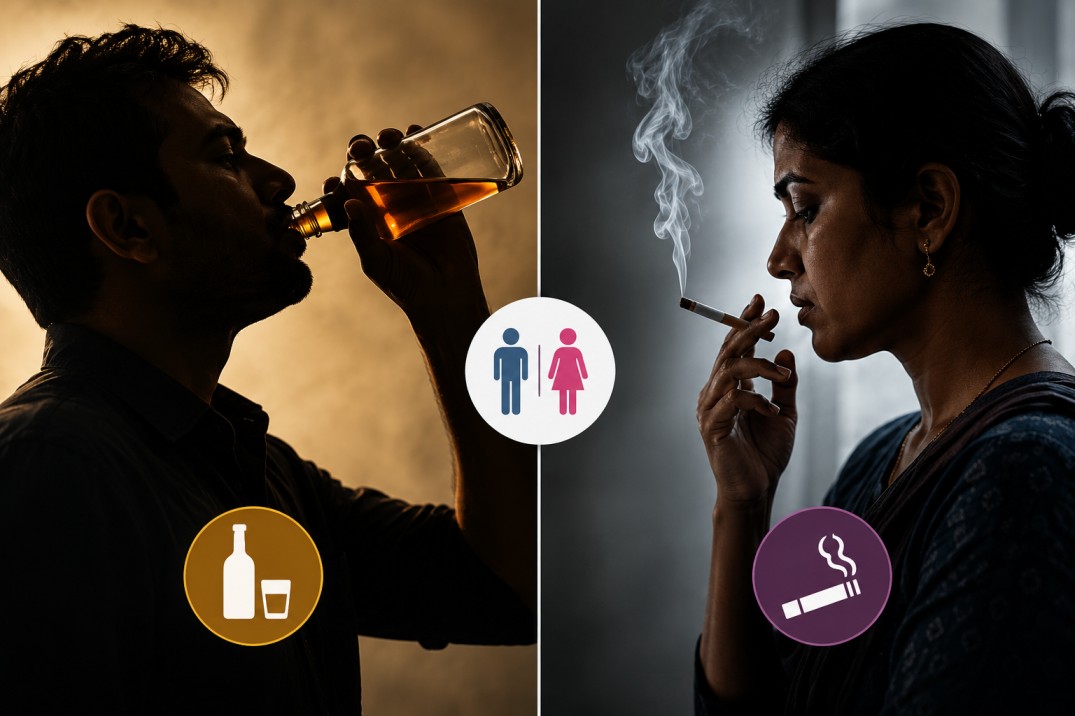
According to data from the National Family Health Survey (NFHS), alcohol consumption in India remains overwhelmingly concentrated among men, while tobacco use among women, though lower than among men, is significantly more common than alcohol use among women. Recent national estimates show that around 18.9 per cent of men consume alcohol, compared with only 1.1 per cent of women. In contrast, 8.4 per cent of women use tobacco in some form, much higher than the share of women who consume alcohol.
The pattern suggests that while liquor remains the dominant substance among men, tobacco continues to have a stronger foothold among women, particularly in smokeless forms such as gutkha, khaini and chewing tobacco. Public health experts say this difference is shaped by a mix of social acceptance, cultural practices and access, with smoking and drinking by women still carrying stigma in many parts of the country, while smokeless tobacco often remains normalised in households and rural communities.
Among men, tobacco use too remains high. NFHS-6 data cited in recent reports show that 36.3 per cent of men nationally consume tobacco, compared with 8.4 per cent of women. But the contrast becomes sharper when alcohol is factored in: men continue to dominate drinking statistics, while women’s alcohol use remains low at the national level.
Researchers note that women’s tobacco consumption is often overlooked because it is less visible than smoking or drinking, yet it carries serious health consequences including increased risk of cancers, cardiovascular disease and adverse reproductive outcomes. A 2026 study using NFHS-5 data found that tobacco use among Indian women was strongly associated with age, poverty, lower education and residence in certain states, especially in the Northeast.
The findings highlight a broader public health challenge: substance use in India is not uniform, but deeply gendered and shaped by local social norms. Experts say policies must go beyond broad anti-addiction messaging and instead address the specific forms of use seen among men and women — tackling harmful drinking among men while also focusing on smokeless and smoked tobacco use among women before it turns into a larger, under-recognised health burden.