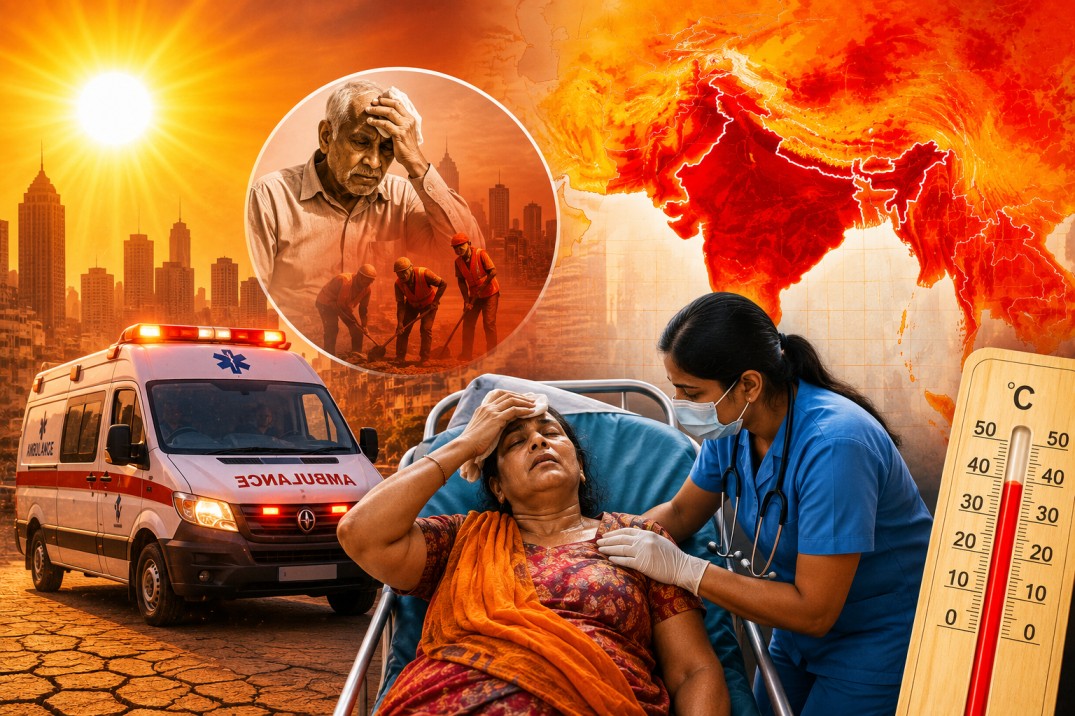
New Delhi: Rising global temperatures could lead to a dramatic increase in heat-related illnesses, with a new study warning that hospitalizations caused by extreme heat may nearly double by 2040. Researchers say the findings highlight the growing public health threat posed by climate change and the urgent need for stronger preparedness measures.
According to the study, annual emergency department visits and hospital admissions linked to extreme heat could rise from approximately 109,000 cases currently to nearly 237,000 cases by 2040. The surge is expected to place significant strain on healthcare systems while substantially increasing medical costs.
Health experts warn that vulnerable groups, including older adults, children, people with chronic diseases, low-income communities, and outdoor workers, are at the greatest risk. Prolonged exposure to high temperatures can lead to dehydration, heat exhaustion, heatstroke, and worsening of existing cardiovascular and respiratory conditions.
The researchers noted that healthcare expenses associated with heat-related illnesses could exceed $1 billion annually if current warming trends continue. The burden is expected to be particularly severe in urban areas, where the “heat island effect” often causes temperatures to rise higher than in surrounding regions.
Experts are calling for stronger public health interventions, including improved heat warning systems, expanded access to cooling centers, public awareness campaigns, and urban planning strategies aimed at reducing heat exposure. They also stress the importance of protecting vulnerable populations during periods of extreme heat.
The findings come as many parts of the world experience increasingly frequent and intense heatwaves, a trend scientists attribute largely to climate change. Public health officials warn that without immediate action, heat-related illnesses and deaths could become a major challenge for healthcare systems in the coming decades.
The study serves as a reminder that climate change is not only an environmental issue but also a growing health crisis requiring coordinated action from governments, healthcare providers, and communities worldwide.