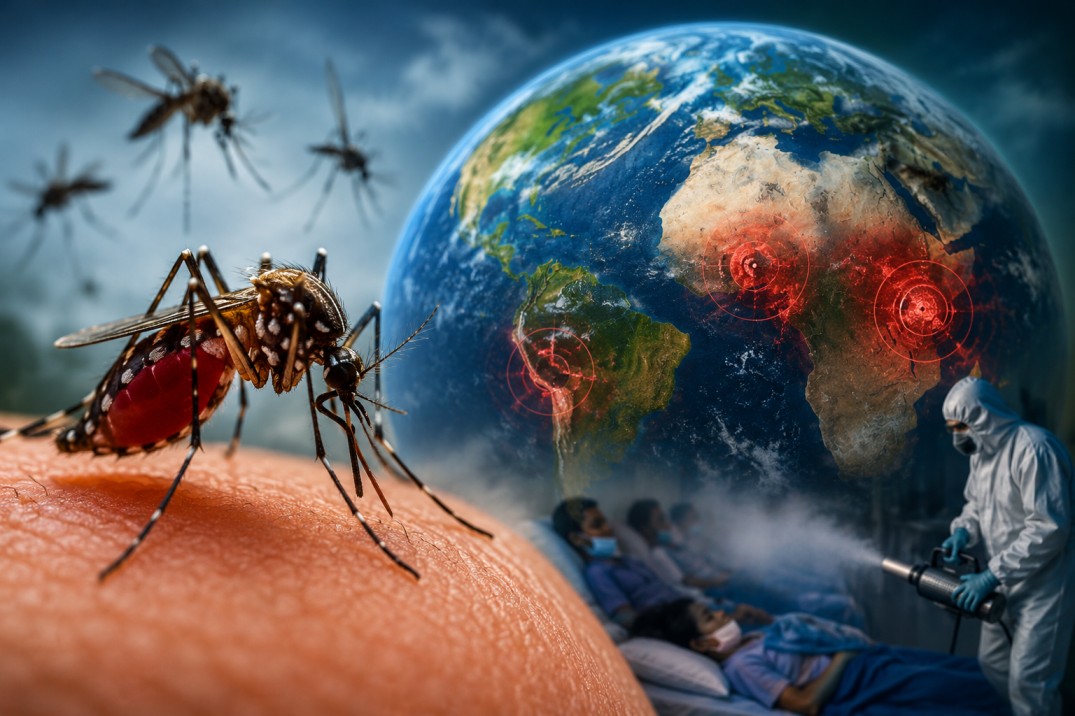
Geneva: The World Health Organization (WHO) has expressed concern over the increasing global burden of mosquito-borne diseases, warning that a rise in infections and deaths linked to illnesses such as malaria, dengue, and chikungunya is threatening public health across several regions.
Health experts say climate change, rapid urbanization, population growth, and increased international travel are contributing to the spread of disease-carrying mosquitoes into new areas. As temperatures rise and rainfall patterns shift, mosquito populations are expanding, creating favorable conditions for disease transmission.
Malaria remains one of the deadliest mosquito-borne illnesses worldwide, claiming hundreds of thousands of lives each year, particularly among young children in Africa. Despite progress in prevention and treatment, the disease continues to place a heavy burden on health systems in many low- and middle-income countries.
Meanwhile, dengue fever has reached unprecedented levels in several parts of the world. Large outbreaks have been reported across Asia, Latin America, and the Pacific region, leading to a sharp increase in hospitalizations and deaths. Health authorities have warned that dengue is spreading into areas where it was previously uncommon.
The resurgence of chikungunya has also raised alarms among global health officials. The virus, known for causing severe joint pain and fever, has re-emerged in multiple countries, prompting concerns about the potential for wider outbreaks.
WHO has urged governments to strengthen disease surveillance, invest in mosquito-control programs, improve access to healthcare services, and increase public awareness about preventive measures. Experts emphasize that eliminating stagnant water, using mosquito repellents, sleeping under protective nets, and seeking timely medical care can significantly reduce the risk of infection.
Public health authorities warn that without sustained global action, mosquito-borne diseases could continue to spread, reversing years of progress made in combating some of the world’s most persistent infectious threats.