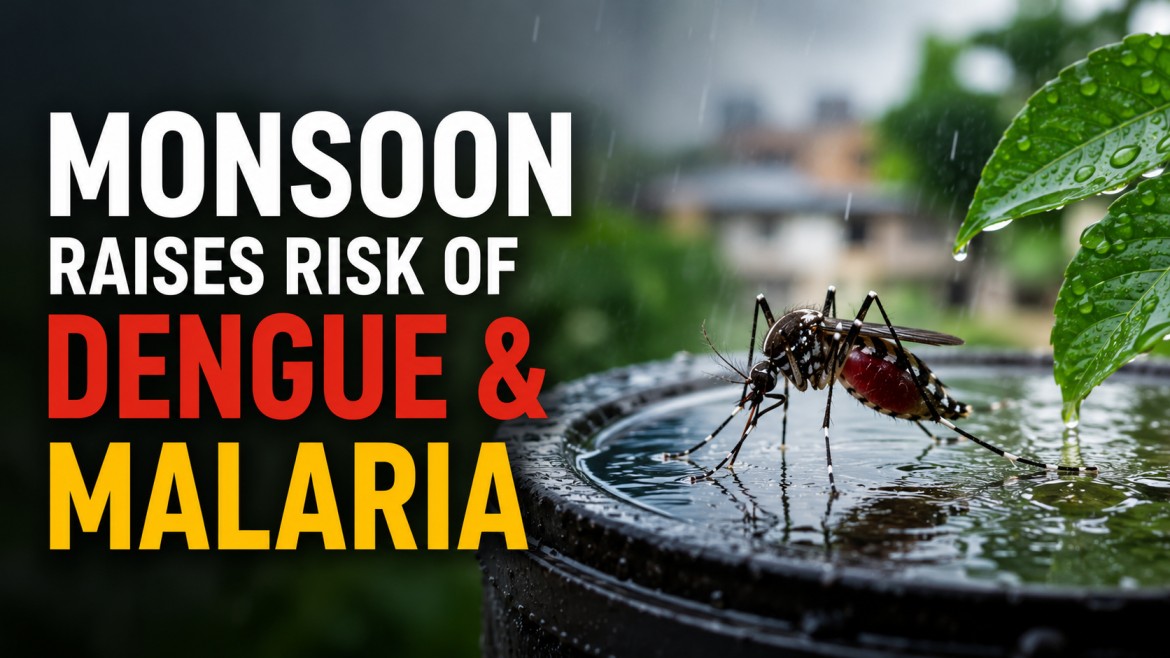
As the monsoon brings much-needed relief from the scorching summer heat, it also creates ideal conditions for the spread of mosquito-borne diseases such as dengue and malaria. Every year, India witnesses a surge in these infections during and after the rainy season, making prevention and early awareness more important than ever.
Why Does the Risk Increase During the Monsoon?
The primary reason is stagnant water. Rainwater often collects in flower pots, discarded tyres, buckets, coolers, rooftop tanks, construction sites, and clogged drains. These become perfect breeding grounds for mosquitoes.
The Aedes aegypti mosquito, which spreads dengue, breeds in clean, stagnant water and is most active during the day. On the other hand, the Anopheles mosquito, responsible for malaria, breeds in both clean and polluted stagnant water and usually bites from dusk to dawn.
High humidity and warm temperatures during the rainy season further accelerate mosquito breeding and increase their lifespan, allowing them to spread infections more efficiently.
Dengue: Symptoms to Watch For
Dengue is caused by a virus transmitted through the bite of an infected Aedes mosquito. Symptoms usually appear four to ten days after the bite and may include:
- Sudden high fever
- Severe headache
- Pain behind the eyes
- Muscle and joint pain
- Nausea and vomiting
- Skin rash
- Extreme fatigue
In some cases, dengue can progress to severe dengue, leading to internal bleeding, difficulty breathing, low blood pressure, and organ damage. Immediate medical attention is crucial if warning signs such as persistent vomiting, severe abdominal pain, bleeding gums, or blood in vomit or stool develop.
Malaria: A Preventable Yet Serious Disease
Malaria is caused by Plasmodium parasites transmitted through infected Anopheles mosquitoes. Common symptoms include:
- High fever with chills
- Excessive sweating
- Headache
- Muscle aches
- Weakness
- Nausea and vomiting
If left untreated, malaria can cause severe complications affecting the brain, kidneys, lungs, and other organs, especially in children, pregnant women, and older adults.
Who Is Most at Risk?
While anyone can contract dengue or malaria, certain groups are more vulnerable:
- Children
- Older adults
- Pregnant women
- People with weakened immunity
- Individuals living in densely populated urban or flood-prone areas
How to Protect Yourself
Preventing mosquito bites and eliminating breeding sites remain the most effective strategies.
Health experts recommend:
- Empty and clean water containers every week.
- Cover overhead tanks and water storage containers.
- Change cooler water regularly.
- Keep drains clean and prevent water stagnation.
- Wear full-sleeved clothing, especially during peak mosquito activity.
- Use mosquito repellents and insecticide-treated nets.
- Install window and door screens where possible.
- Keep surroundings clean by removing discarded containers that collect rainwater.
When Should You See a Doctor?
Do not ignore a fever during the monsoon season. Seek medical attention promptly if you develop:
- Fever lasting more than one or two days
- Severe headache or body pain
- Chills with repeated fever
- Rash
- Bleeding from the nose or gums
- Persistent vomiting
- Difficulty breathing
- Extreme weakness or confusion
Early diagnosis through blood tests can help ensure timely treatment and reduce the risk of serious complications.
The monsoon season is closely linked to an increase in dengue and malaria cases across India because of favorable mosquito breeding conditions. However, these diseases are largely preventable through proper sanitation, eliminating stagnant water, protecting against mosquito bites, and seeking timely medical care. As the rains continue, community participation and individual vigilance remain the strongest defenses against mosquito-borne illnesses.