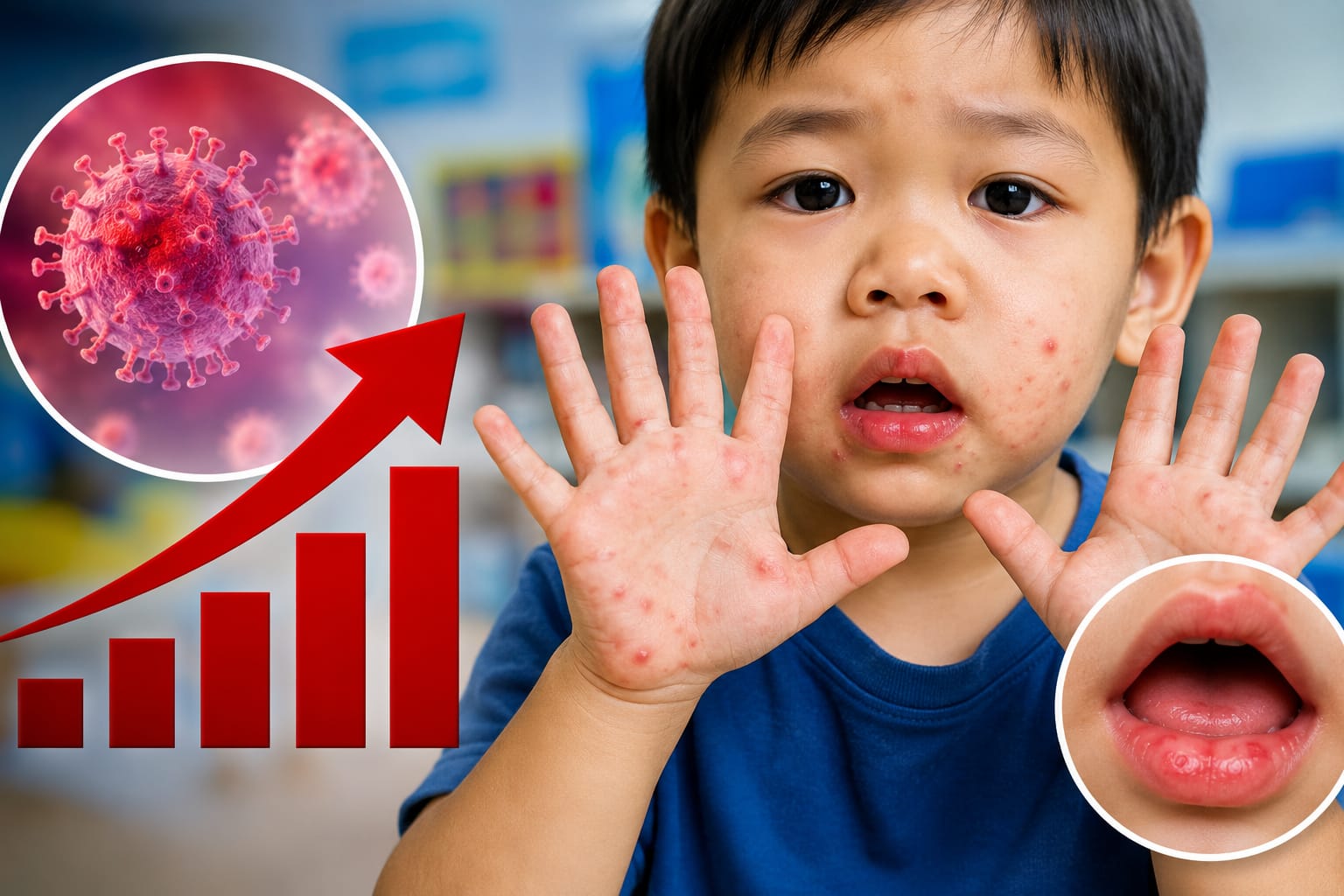
A noticeable surge in cases of Hand, Foot and Mouth Disease (HFMD) among young children has prompted health authorities and pediatricians to issue advisories for parents and schools. The viral illness, which primarily affects children under the age of five, is spreading across several regions, especially in daycare centres and schools.
Doctors report an increase in outpatient visits with symptoms consistent with HFMD, including fever, painful mouth ulcers, and rashes on the hands and feet. The infection is commonly caused by Coxsackievirus A16 and Enterovirus 71, both of which spread easily through close contact, respiratory droplets, and contaminated surfaces.
“HFMD is usually mild, but its rapid spread among children is concerning,” said pediatric specialists, noting that poor hand hygiene and crowded environments contribute to transmission. While most children recover within 7–10 days without complications, some cases may require medical attention due to dehydration or persistent fever.
Health officials have urged parents to watch for early signs such as reduced appetite, irritability, and sore throat. Schools and childcare facilities are being advised to maintain strict hygiene protocols, including regular sanitisation of toys and surfaces, and encouraging frequent handwashing among children.
There is currently no specific antiviral treatment for HFMD, and care remains largely supportive—focusing on hydration, fever management, and pain relief. Experts recommend isolating infected children until symptoms subside to prevent further spread.
Authorities are also considering awareness campaigns to educate communities about preventive measures. Parents are advised to seek medical guidance if symptoms worsen or if the child shows signs of lethargy, difficulty swallowing, or persistent high fever.
As cases continue to rise, vigilance and early intervention remain key to controlling the outbreak and ensuring children’s safety.