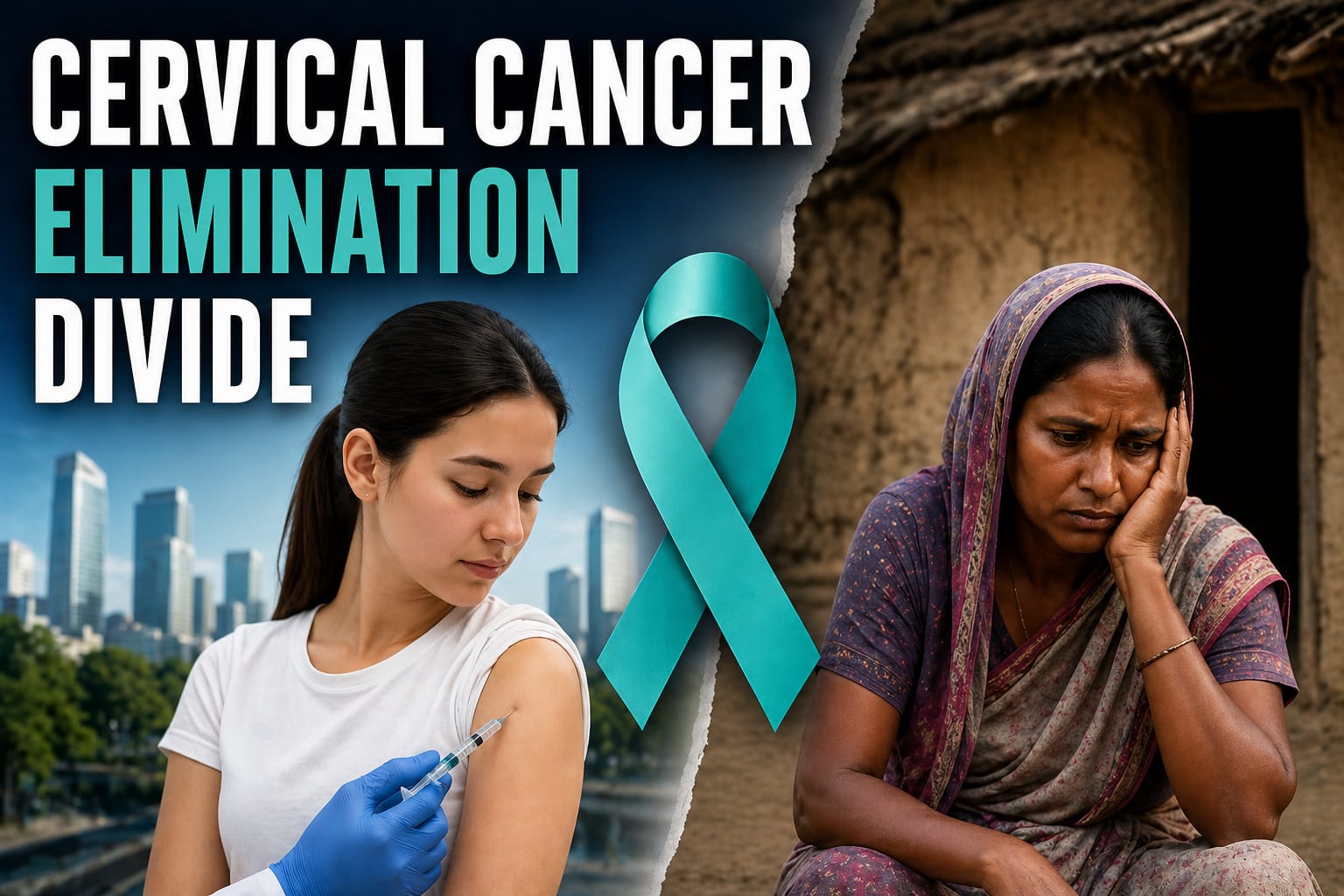
A new global study has highlighted a stark inequality in the fight against cervical cancer, suggesting that high-income countries could eliminate the disease by as early as 2048, while low- and middle-income nations risk falling far behind due to slower progress in prevention and treatment.
Cervical cancer, largely caused by persistent infection with the human papillomavirus (HPV), is considered one of the most preventable forms of cancer. Tools such as HPV vaccination, routine screening, and early treatment have already led to significant declines in cases across wealthier nations. However, the study warns that these gains are not being mirrored globally.
According to researchers, countries with strong healthcare systems are rapidly scaling up HPV vaccination among adolescents and ensuring widespread access to screening methods like Pap smears and HPV testing. These combined strategies are putting them on track to meet elimination targets set by the World Health Organization.
In contrast, poorer countries continue to face major barriers. Limited healthcare infrastructure, lack of awareness, high costs, and inadequate vaccine coverage are slowing down efforts. In many of these regions, cervical cancer remains one of the leading causes of cancer-related deaths among women.
The study also points out that while global initiatives have improved vaccine availability, distribution gaps persist. Rural and underserved populations are especially at risk, often missing out on both vaccination and early diagnosis.
Public health experts stress that without urgent investment and international support, the global goal of eliminating cervical cancer as a public health problem could remain out of reach for decades in developing regions. Expanding affordable vaccination programs, improving screening access, and strengthening healthcare systems are seen as critical steps.
The findings serve as a reminder that while scientific tools to eliminate cervical cancer already exist, equitable access remains the biggest challenge. Bridging this gap, experts say, will determine whether elimination becomes a global success story or remains limited to a handful of nations.