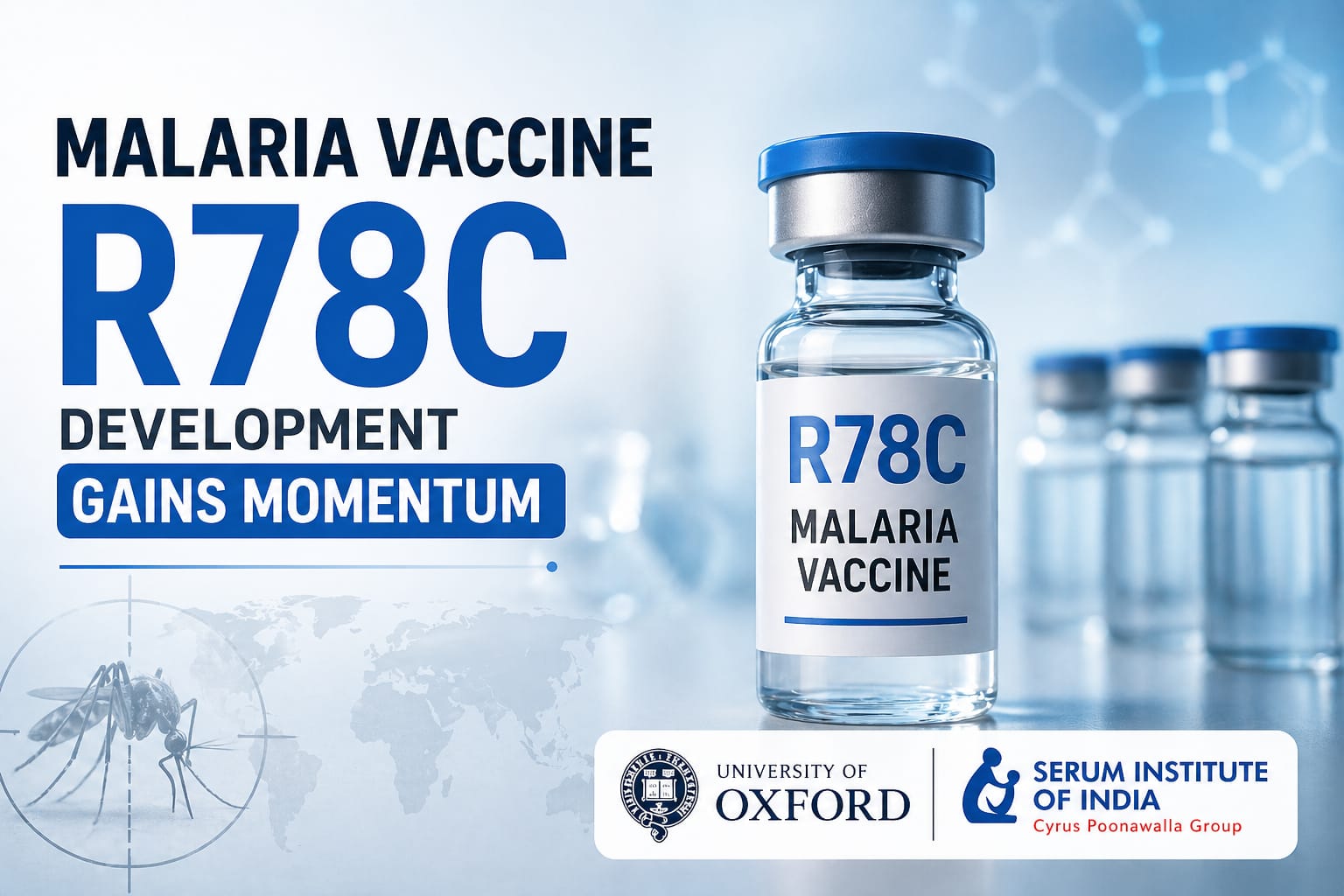
A new collaboration between the University of Oxford and the Serum Institute of India is set to fast-track the development of a promising next-generation malaria vaccine candidate, R78C, offering fresh hope in the global fight against one of the world’s deadliest infectious diseases.
The agreement builds on the success of earlier malaria vaccine efforts and aims to improve efficacy, scalability, and accessibility, particularly for low- and middle-income countries where malaria remains endemic. Researchers involved in the project say R78C has shown encouraging early-stage results, with the potential to provide stronger and longer-lasting protection compared to existing vaccines.
Malaria, caused by the parasite Plasmodium falciparum, continues to claim hundreds of thousands of lives annually, with children in sub-Saharan Africa bearing the highest burden. While the introduction of the RTS,S and more recently R21/Matrix-M marked significant milestones, experts say there is still a pressing need for vaccines that offer higher efficacy and longer protection.
The R78C candidate is being designed to address these gaps, potentially improving immune response while remaining cost-effective for mass production. The involvement of the Serum Institute, one of the world’s largest vaccine manufacturers, is expected to play a crucial role in ensuring that, if successful, the vaccine can be produced at scale and distributed widely.
Officials from both organisations highlighted that the partnership represents a critical step toward bridging the gap between research and real-world implementation. By combining Oxford’s scientific expertise with India’s manufacturing strength, the collaboration aims to accelerate clinical development timelines and expand global access.
Public health experts have welcomed the move, noting that innovation in vaccine design, coupled with equitable distribution strategies, is key to achieving long-term malaria control and eventual eradication.
As trials progress, the global health community will be watching closely, with hopes that R78C could become a vital tool in reducing malaria-related deaths and easing the disease burden in vulnerable regions.