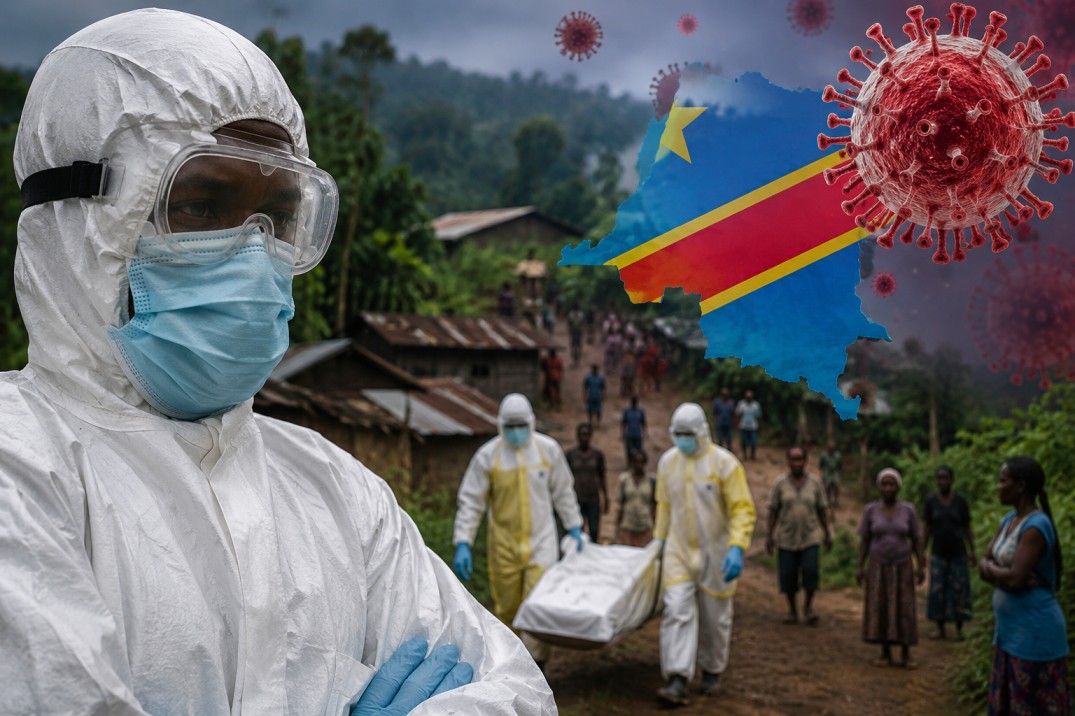
Kinshasa, June 2: The Ebola outbreak in the Democratic Republic of Congo (DRC) continues to escalate, with health authorities reporting that the number of confirmed cases has risen to 321, raising concerns among international health agencies about the virus’s rapid spread in conflict-affected eastern regions. The outbreak, caused by the rare Bundibugyo strain of the Ebola virus, has already become one of the largest Ebola epidemics recorded in recent years.
The epidemic is primarily concentrated in Ituri Province, although confirmed infections have also been reported in North Kivu and South Kivu. Health officials say dozens of deaths have been linked to the outbreak, while hundreds of suspected cases remain under investigation. The World Health Organization (WHO) has warned that the actual number of infections may be significantly higher than officially reported due to challenges in surveillance and case detection.
WHO Director-General Dr. Tedros Adhanom Ghebreyesus recently visited the DRC to assess response efforts and discuss containment measures with Congolese authorities. He emphasized the need for stronger community engagement, improved contact tracing, and increased international support to prevent further transmission. Health workers continue to face major obstacles, including insecurity, population displacement, and limited access to some affected communities.
The current outbreak is particularly concerning because it involves the Bundibugyo strain, for which there is no approved vaccine or specific treatment. Global health organizations and research institutions have accelerated efforts to develop vaccines and evaluate potential therapies. The Coalition for Epidemic Preparedness Innovations (CEPI) has pledged millions of dollars to support vaccine development, while pharmaceutical companies are exploring antiviral options that could help curb the spread of the disease.
Neighboring Uganda has also reported Ebola cases linked to cross-border transmission from the DRC, prompting authorities to strengthen surveillance and border screening measures. However, the WHO has cautioned against blanket travel restrictions, arguing that they can hinder outbreak reporting and response efforts.
Despite the worsening situation, health officials point to a growing number of recoveries as a sign of hope. Treatment centers have expanded capacity, and international partners continue to provide medical supplies, diagnostics, and technical assistance. Experts stress that early detection, isolation of cases, and community cooperation remain critical to bringing the outbreak under control.
The WHO has classified the outbreak as a Public Health Emergency of International Concern, underscoring the need for a coordinated global response. As case numbers continue to rise, health authorities are urging affected communities to seek medical care promptly and follow public health guidance to limit further spread of the deadly virus.