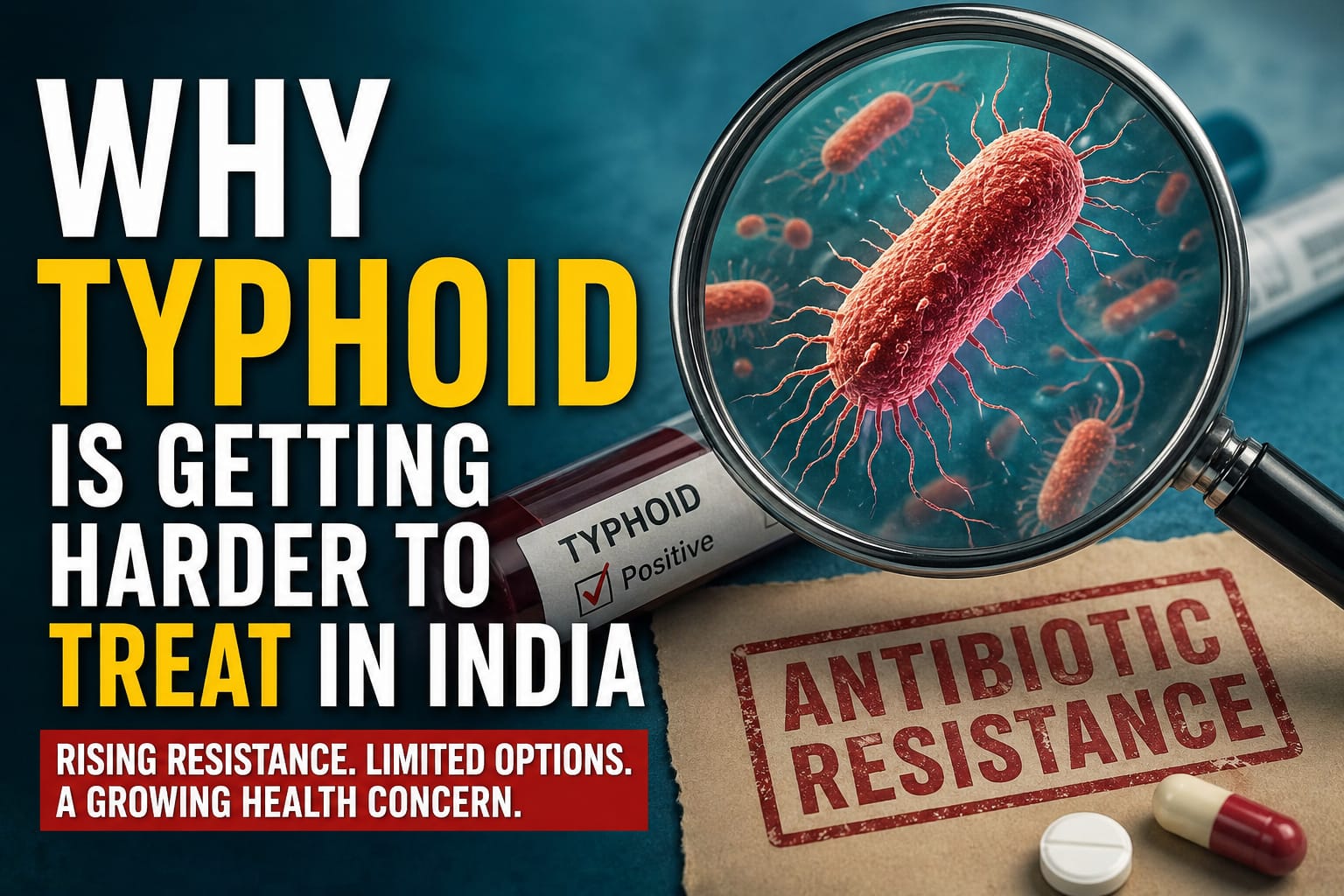
Typhoid fever, once considered a manageable bacterial infection, is increasingly becoming difficult to treat across India as antibiotic resistance rises sharply. Health experts warn that the changing behaviour of Salmonella Typhi, the bacterium responsible for the disease, is reducing the effectiveness of commonly used drugs and complicating treatment outcomes.
Over the past two decades, typhoid has steadily evolved from a treatable illness to one challenged by multidrug resistance. Earlier, first-line antibiotics such as ampicillin, chloramphenicol and cotrimoxazole were effective, but resistance to these drugs emerged, forcing a shift to newer medicines like fluoroquinolones and third-generation cephalosporins. Today, even these newer antibiotics are losing their effectiveness. Studies show high levels of resistance to fluoroquinolones in India, with rates exceeding 60% and even peaking much higher in certain periods.
The situation is worsening with the emergence of strains resistant to critical drugs like ceftriaxone and azithromycin, which are currently the mainstay of treatment. Research from different parts of India has reported growing resistance to these antibiotics, signalling a narrowing window of effective therapies. In some regions, scientists have detected typhoid strains showing resistance to multiple commonly prescribed antibiotics, with alarming reports of resistance levels reaching up to 90% in certain studies.
Another major concern is the rise of extensively drug-resistant (XDR) typhoid strains, which do not respond to several classes of antibiotics. These strains leave doctors with very limited treatment options, often requiring expensive or intravenous medications that are not always accessible in resource-limited settings.
Experts attribute this growing resistance largely to the overuse and misuse of antibiotics. In India, antibiotics are often taken without proper medical supervision, prescribed unnecessarily, or not completed as per course guidelines. Such practices allow bacteria to adapt and survive, making them stronger against existing drugs.
In addition, poor sanitation, unsafe drinking water, and high disease burden create an environment where resistant strains can spread rapidly. India remains one of the countries with a high number of typhoid cases, increasing the chances of mutation and transmission of resistant bacteria.
The growing resistance is already having serious consequences. It is contributing to longer illness duration, increased hospitalisation, higher treatment costs, and a greater risk of complications, especially among children. Recent estimates suggest that antibiotic-resistant typhoid accounts for a significant share of the disease’s economic burden in India.
Public health experts stress that urgent steps are needed to tackle the crisis. These include stricter regulation of antibiotic use, improved diagnostic testing before prescribing medicines, better sanitation infrastructure, and wider use of typhoid conjugate vaccines. Without coordinated action, typhoid could become increasingly difficult, and in some cases impossible to treat with existing antibiotics.