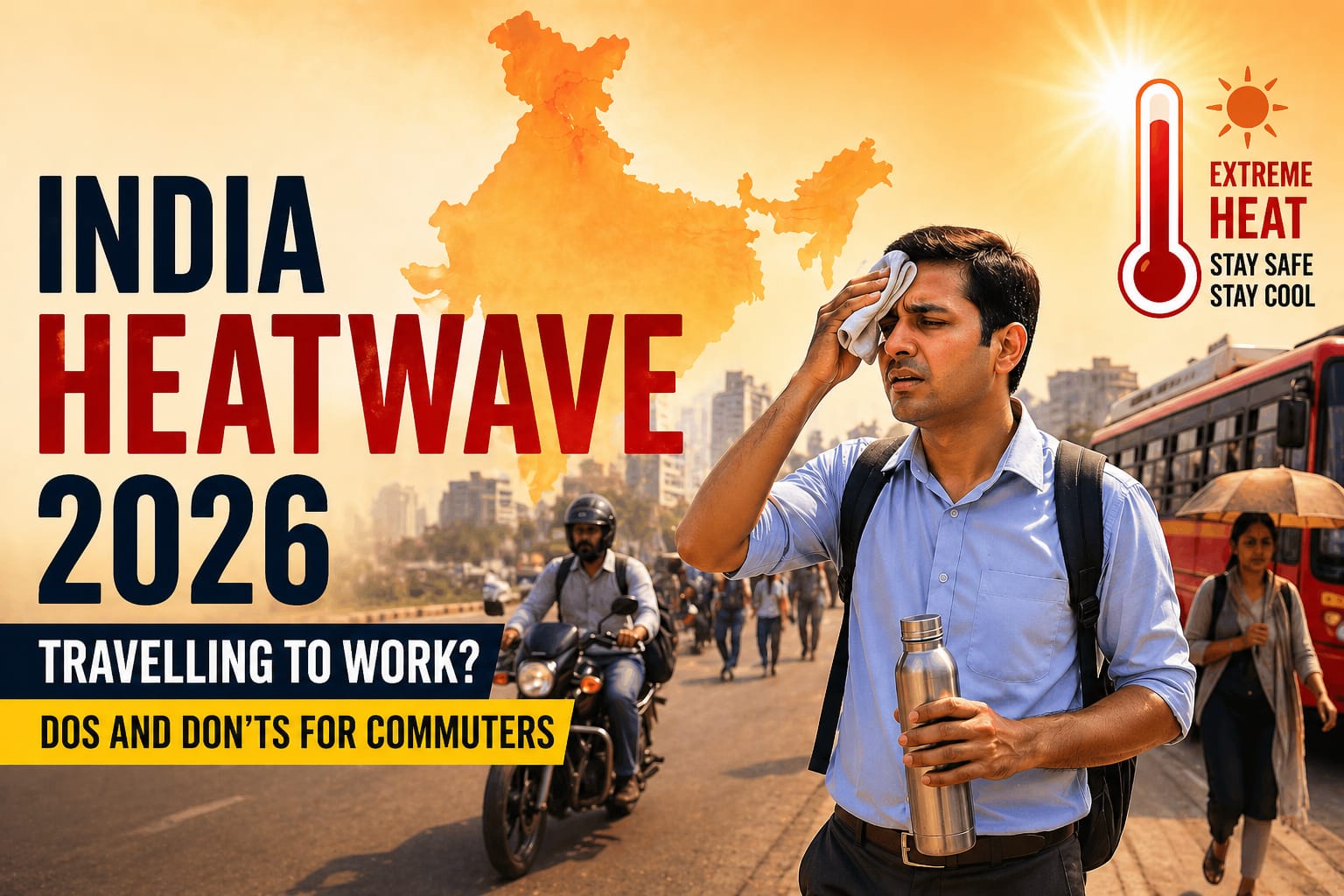
As India heads into another spell of extreme summer conditions, heatwaves are emerging as a significant public health challenge, particularly for millions of daily commuters. From crowded buses to long two-wheeler rides under direct sunlight, the journey to work is becoming increasingly risky as temperatures continue to climb.
The India Meteorological Department has already indicated that several parts of the country are experiencing above-normal temperatures, with forecasts pointing toward more intense and prolonged heatwave conditions in the coming weeks. This has raised concerns among health experts, who warn that repeated exposure to high temperatures can severely impact the body’s ability to regulate heat.
One of the most serious risks during such conditions is Heatstroke, a medical emergency that occurs when the body overheats and can no longer cool itself effectively. If left untreated, it can lead to organ damage and even death. However, less severe conditions such as dehydration, heat exhaustion, and fatigue are far more common, and often overlooked during daily routines.
For working professionals who cannot avoid commuting, doctors emphasise the importance of preventive care. Staying well-hydrated remains the first line of defence. Carrying water and drinking at regular intervals helps maintain electrolyte balance and prevents excessive fluid loss. Experts caution against relying on caffeinated or sugary beverages, which may worsen dehydration rather than alleviate it.
Clothing choices can also influence how the body responds to heat. Light-coloured, loose-fitting cotton garments are recommended as they allow better air circulation and reduce heat absorption. Using protective gear such as umbrellas, caps, or scarves can significantly minimise direct sun exposure, especially during peak afternoon hours.
Timing, wherever flexible, can make a meaningful difference. Health professionals advise avoiding travel between 12 pm and 4 pm, when solar radiation is at its peak. For those with fixed schedules, opting for shaded routes, using air-conditioned transport when possible, or taking short breaks in cooler environments during transit can help reduce cumulative heat exposure.
Equally important is recognising early warning signs of heat-related stress. Symptoms such as dizziness, headache, nausea, muscle cramps, and excessive sweating should not be ignored. Immediate action, like moving to a shaded or cool place, hydrating, and resting, can prevent the condition from escalating into a medical emergency.
On the other hand, certain habits can increase vulnerability. Travelling on an empty stomach, wearing tight or synthetic clothing, and ignoring fluid intake can all heighten the risk of heat-related illnesses. Authorities also continue to warn against leaving children, elderly individuals, or pets inside parked vehicles, where temperatures can rise dangerously within minutes.
In response to the escalating heat, governments across states are strengthening heat action plans, improving access to drinking water, and setting up cooling zones in high-risk areas. Public health messaging is also being amplified to ensure that citizens are better equipped to handle the extreme weather.
As temperatures continue to rise, the daily commute is no longer just a routine, it is a potential health risk. Experts stress that with mindful planning and simple precautions, commuters can significantly reduce their exposure and stay safe during one of the harshest summers in recent years.