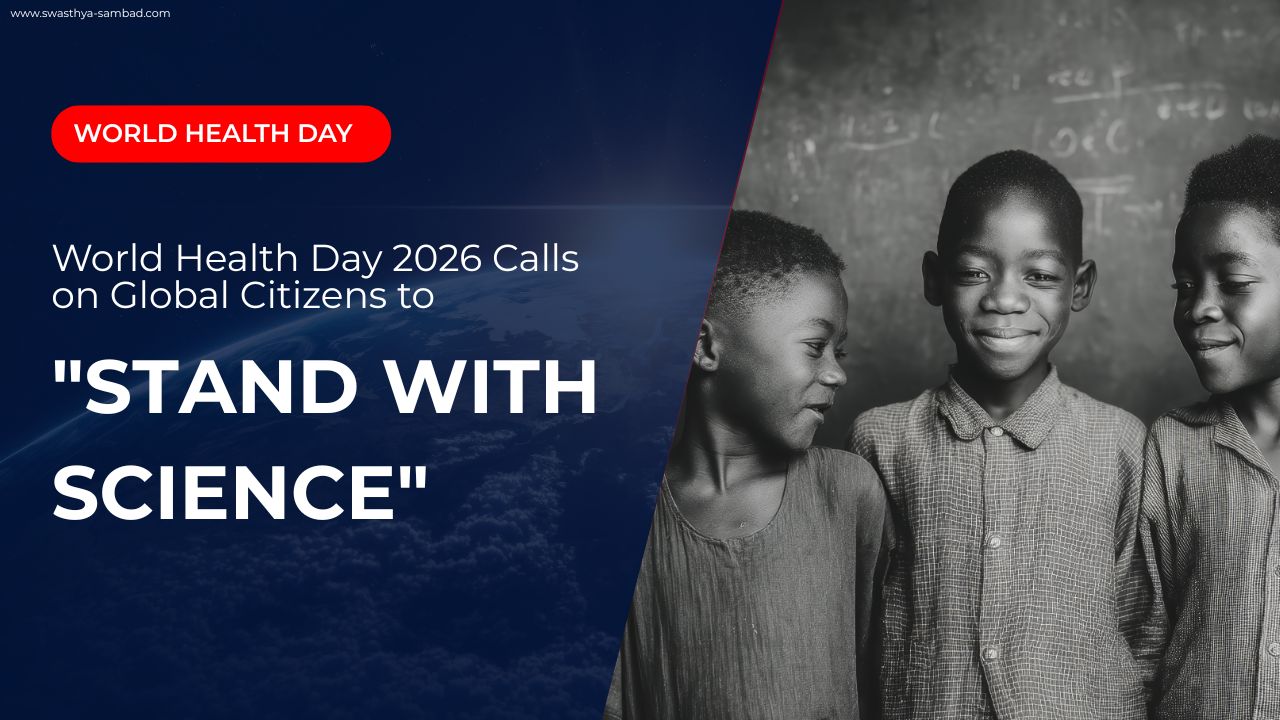
The World Health Organization (WHO) celebrated World Health Day on April 7, 2026, under a powerful and timely new theme: “Together for health. Stand with science.” This year’s campaign marks a decisive shift in global health strategy, moving away from general awareness toward a year-long mobilization focused on scientific collaboration and the “One Health” approach—recognizing that the health of humans is inextricably linked to the health of animals, plants, and our shared environment.
A Unified Scientific Front
The 2026 observance was anchored by two unprecedented global events that brought together the largest scientific network in history. In Lyon, France, the International One Health Summit (April 5–7) convened heads of state and global leaders to transform scientific evidence into measurable policy. Simultaneously, the inaugural Global Forum of WHO Collaborating Centres (April 7–9) gathered representatives from nearly 800 scientific institutions across 80 countries.
“Science is one of humanity’s most powerful tools for protecting and improving health,” stated Dr. Tedros Adhanom Ghebreyesus, WHO Director-General. “From vaccines that have saved over 154 million children to modern imaging that catches disease early, our progress is built on global solidarity and evidence.”
Combating the “Infodemic”
A major pillar of this year’s campaign is the push to rebuild public trust in health institutions. In an era of rapid digital information, the WHO is urging governments and individuals alike to prioritize facts over misinformation.
The campaign encourages the public to become “ambassadors of science” by:
-
Choosing Evidence: Relying on science-based solutions for daily health decisions.
-
Engaging with Facts: Joining the global conversation using the hashtag #StandWithScience.
-
Promoting Transparency: Asking health questions and sharing stories of how scientific breakthroughs have improved personal well-being.
The “One Health” Mandate
The research spotlighted during the 2026 summit highlighted a sobering reality: approximately 60% of known infectious diseases and 75% of emerging pathogens are zoonotic, originating in animals. The One Health framework seeks to prevent future pandemics by integrating environmental conservation, veterinary medicine, and human healthcare into a single, proactive surveillance system.
“We can no longer treat human health in a vacuum,” noted global health experts in Lyon. “Biodiversity loss, climate change, and unsafe food systems are not just environmental issues; they are the primary drivers of modern disease.”
Looking Ahead: A Year of Action
World Health Day 2026 isn’t just a 24-hour celebration; it serves as the launchpad for a year of targeted initiatives. Key priorities for the coming months include:
-
Maternal and Child Health: Building on the 40% reduction in global maternal mortality achieved since 2000.
-
Disease Elimination: Advancing the goal to eliminate over 30 diseases, including malaria and cervical cancer, by 2030.
-
Clinical Innovation: Launching the “Clinical Trial Accelerator” to use AI and global networks to speed up the development of life-saving treatments.
As the world continues to navigate complex health threats, the message of 2026 is clear: our best defense is a commitment to the truth, a reliance on evidence, and a refusal to let misinformation dictate the future of our well-being.